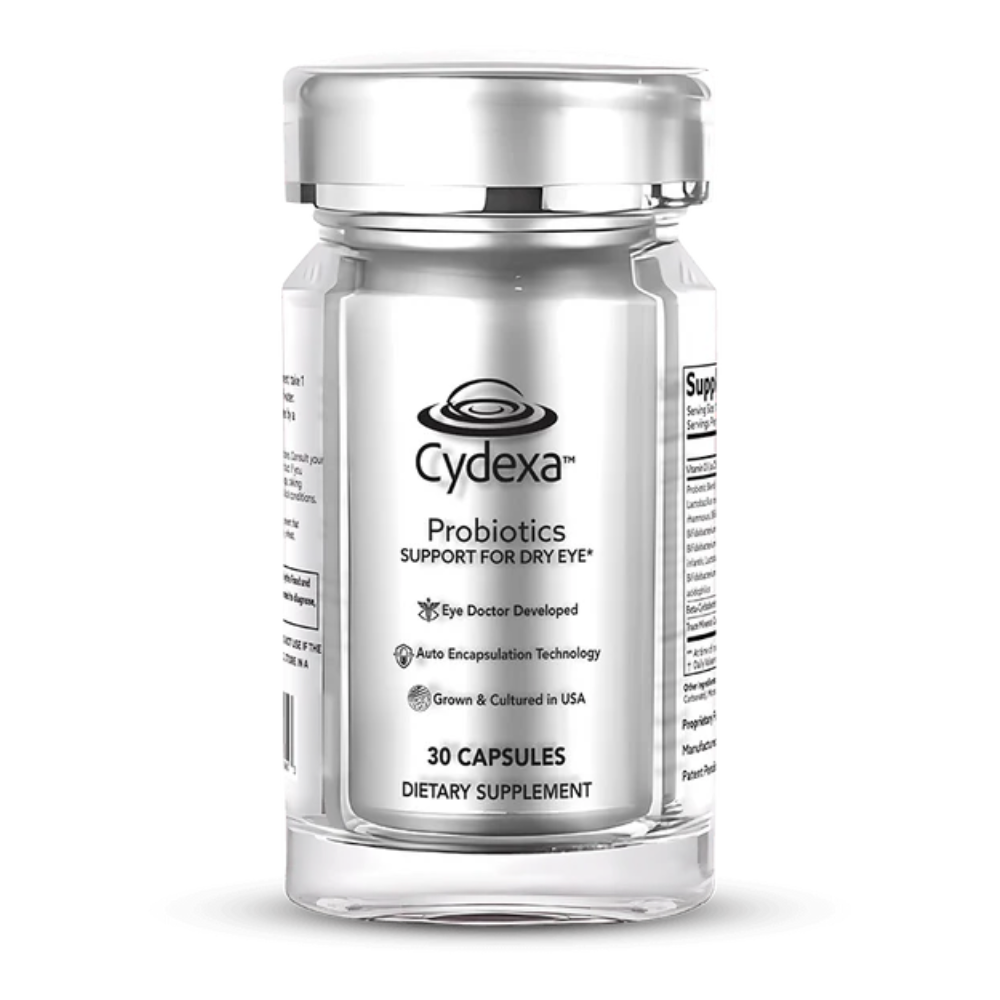


Bottom line first: With BlephEx potentially being discontinued, there's no perfect 1:1 replacement. What exists now are adjacent solutions with tradeoffs:
- ZEST: closest functional replacement for in-office lid debridement (okra-based, manual, highly effective for Demodex)
- AB Max: most literal mechanical successor (spinning sponge with pulse mode, fewer studies)
- NuLids: excellent home maintenance tool (not an in-office replacement)
If you loved BlephEx for clinician-controlled, one-session lid cleaning, ZEST is where most practices are migrating.
Quick Comparison: Current In-Office Options
| Factor | ZEST | AB Max | BlephEx |
|---|---|---|---|
| Method | Okra-based gel, hand-applied | Spinning micro-sponge with pulse mode | Spinning micro-sponge (original) |
| Availability | Available in 2K+ clinics | Unknown | Being discontinued |
| Comfort | Gentle massage, no vibration | Tickling/pulsing sensation | Tickling/vibrating sensation |
| Anesthetic needed | No | Optional | Usually yes |
| Demodex effectiveness | 40% complete eradication in 3 months[22][23] | Expected similar to BlephEx | Similar when combined with tea tree oil[9] |
| Time | 15-20 minutes | 5-8 minutes | 6-8 minutes |
| Cost | $160-$350 per session[30] | $150-$250 per session | $150-$250 per session[49][50] |
| Best for | Closest functional BlephEx replacement; sensitive eyes, Demodex | Mechanical exfoliation preference | Historical reference |
| Evidence quality | Strong recent trials | Manufacturer data only | Mixed (strong for Demodex, variable for general blepharitis) |
What These Treatments Actually Do
BlephEx has historically been the most widely used mechanical in-office eyelid hygiene device since the mid-2010s, but it's being discontinued—so practitioners and patients are moving to alternatives.
All of these treatments perform in-office eyelid debridement—professional deep-cleaning of your eyelid margins to remove the bacterial biofilm, debris, and Demodex mites that cause blepharitis and dry eye[1][2].
At-home lid scrubs can't reach the level of cleaning these procedures achieve. The professional exfoliation rapidly reduces bacterial load and inflammatory toxins, providing faster relief than home care alone[8][5].
The current landscape: ZEST has become a commonly adopted alternative, particularly in practices prioritizing comfort and Demodex control, AB Max represents the mechanical successor for practices wanting BlephEx-style exfoliation, and NuLids serves as home maintenance (not an in-office replacement).
ZEST: The Primary BlephEx Alternative
For practices moving away from BlephEx, ZEST has become the go-to in-office replacement. It's not a mechanical clone—it's a different approach that achieves the same clinical goal: thorough eyelid margin cleaning.
ZEST uses a patented okra-based gel applied manually with a foam swab[17]. No motors, no spinning brushes.
The process: Your doctor massages the okra gel along your lash lines for several minutes while your eyes are closed. The gel binds to crusts, oils, and biofilm, then gets rinsed off with saline[11][13]. Feels like a lid massage—most patients describe it as surprisingly comfortable[18].
Why doctors are switching to ZEST:
- Clinician-controlled, one-session treatment (like BlephEx was)
- More comfortable for patients (no vibration, no anesthetic needed)[17]
- Specifically effective against Demodex mites (what BlephEx was often used for)
- Gentle enough for sensitive eyes who couldn't tolerate mechanical devices
Clinical evidence:
- Single treatment improved tear stability and reduced dry eye symptoms for 2+ months[20][21]
- Reduced Demodex mites from 10 per lash to 1 per lash over 3 months[22][23]
- Equivalent to tea tree oil for mite eradication but with significantly less irritation[24]
- No anesthetic drops required[17]
Evidence limitations: ZEST studies are newer and involve smaller cohorts, and long-term outcomes beyond a few months are still being evaluated.
Who should choose ZEST:
- Anyone previously using BlephEx who wants the closest functional replacement
- Practices transitioning away from BlephEx
- Sensitive eyes or low pain tolerance
- Demodex blepharitis (the okra is specifically effective against mites)
- Preference for natural treatments
- Cannot tolerate tea tree oil
BlephEx: Understanding What's Being Replaced
BlephEx was the original in-office blepharitis treatment, launched in the mid-2010s as a handheld electromechanical device with a spinning disposable micro-sponge tip. Essentially an "electric toothbrush" for eyelids that rotated a medical-grade sponge along the lid margins to scrub away scurf, crusts, and biofilm[31][32].
Why it's being discontinued matters for understanding alternatives:
BlephEx pioneered the concept of in-office "blepharoexfoliation." Understanding what made it effective (and what its limitations were) helps explain why practices are moving to different solutions.
What BlephEx did well:
- Fast procedure (6-8 minutes total)[32]
- Mechanical exfoliation of lid margins
- Particularly effective for Demodex when combined with tea tree oil cleanser and daily home care[9][36]
- Reduced bacterial load and improved meibomian gland function in some studies[37][38]
Why the evidence was mixed:
- A 2024 randomized controlled trial found no statistical difference between BlephEx and sham treatment after 4 weeks for general blepharitis[39][40]
- Benefits appeared most consistent for Demodex-related cases with ongoing home maintenance[10]
- Evidence was more variable depending on indication and follow-up duration
The practical reality: Many patients found the vibrating sensation uncomfortable even with numbing drops, and the device created aerosol spray during use[47][48]. These factors, combined with variable clinical evidence, contributed to practices seeking alternatives.
NuLids: Not an In-Office Replacement (But Still Valuable)
Here's where expectations need reset: NuLids is not a BlephEx alternative for in-office debridement. It's an excellent home maintenance device.
Think of it like an electric toothbrush for your eyelids that you use daily at home. Small oscillating silicone tip, 1 minute per day, patient-controlled[68][70].
What NuLids does well:
- Daily maintenance between in-office cleanings
- Helps sustain results after ZEST or other professional treatments
- Clinical study showed 50% reduction in dry eye symptoms after 30 days of consistent use[71][72]
- Safe for self-use, 95% patient satisfaction[29]
- No device-related complications in studies[28]
Why it doesn't replace in-office debridement:
- Requires daily patient compliance (the limiting factor)
- Cannot achieve the same biofilm disruption as professional cleaning
- No "one-and-done reset" that clinicians value in BlephEx/ZEST
The honest framing: If you say "I've used NuLids but preferred BlephEx," you're really saying "I prefer a clinician-controlled, single-session reset." That instinct is correct. NuLids doesn't replace that moment.
Best use case: Pair NuLids home maintenance with periodic in-office ZEST treatments. That combination mirrors what many practices did with BlephEx + home care[52][76].
Safety: All Options Are Low-Risk
None of these treatments are invasive. No cutting, no lasers, no serious complications reported in studies[28][44].
ZEST safety profile:
- No anesthetic needed
- Minimal irritation (soothing ingredients like aloe vera included)[26]
- Temporary lid redness possible, resolves within hours[27]
- Zero serious adverse events in trials[28][29]
AB Max safety profile:
- Similar to BlephEx (mild tickling/vibration)
- Optional anesthetic drops
- Produces less aerosol spray than BlephEx due to pulse mode[47][63]
- No complications reported to date
BlephEx safety profile (historical reference):
- Mild tickling/vibration during procedure
- Temporary lid redness after treatment[46]
- Produced more aerosol spray than oscillating devices[47][48]
- Zero serious adverse events in studies[28]
All are as safe as eyelid treatments get.
Cost Reality
None of these are covered by insurance. All are out-of-pocket.
Current options:
- ZEST: $160-$350 per session[30]
- AB Max: $150-$250 per session (similar to what BlephEx cost)
- NuLids: $300-$400 upfront for device, plus $20-$30/month for replacement tips
Expect to pay around $200 for in-office cleaning. Maintenance frequency: every 4-6 months for chronic blepharitis[49][51].
Annual cost if you need 2-3 sessions: $300-$600.
FSA/HSA accounts typically cover these since they're medical treatments[82][83].
The Maintenance Reality No One Mentions
Here's what matters more than your choice between ZEST and BlephEx: you still need to do home care.
In-office treatments give you a clean slate. Home maintenance keeps it that way. Doctors recommend daily lid wipes, warm compresses, or devices like NuLids between office visits[52][76].
Think of it like dental care: the hygienist cleans your teeth professionally, but you still brush daily. Same principle.
After a thorough in-office cleaning, most patients find their home routine becomes more effective because the major biofilm is gone[8].
AB Max: The Mechanical Successor
For practices that specifically valued BlephEx's mechanical exfoliation and want the closest technical replacement, AB Max is that device.
Introduced in 2019 by Myco Industries (one inventor co-created the original BlephEx), AB Max is essentially "BlephEx 2.0"—a battery-powered handpiece with spinning micro-sponge tips, but with upgraded features[55]:
- Forward and reverse rotation modes
- Unique "Pulse mode" where the sponge rapidly oscillates rather than just spinning continuously[56][57]
- Designed to knock loose stubborn debris while massaging the eyelid margin[57][58]
The process: Nearly identical to BlephEx. Cleaning solution on disposable sponge, optional anesthetic drops (though Pulse mode is gentle enough many patients skip this), then the handpiece spins/pulses along lash lines clearing debris[59]. Total time: 5-8 minutes[60].
The reality check: AB Max has no independent peer-reviewed studies yet. Everything we know comes from manufacturer data and anecdotal provider reports. Given the mechanism mirrors BlephEx, eye doctors expect similar benefits for anterior blepharitis[61].
Why it hasn't replaced BlephEx at scale:
- Newer technology with smaller install base
- Limited independent clinical validation
- Many practices already moving toward non-mechanical alternatives like ZEST
Who should choose AB Max:
- Practices that specifically want mechanical exfoliation (not chemical/manual)
- Providers comfortable with manufacturer data while peer-reviewed studies develop
- Patients who tolerated BlephEx and want something similar
How to Decide Post-BlephEx
If you're a patient whose doctor used BlephEx:
Ask what they're transitioning to. Most practices are moving to ZEST (comfort, evidence, Demodex effectiveness) or AB Max (if they specifically want mechanical exfoliation).
If you're evaluating options for the first time:
Choose ZEST if:
- You want the closest functional replacement for what BlephEx did
- You have sensitive eyes or anxiety about mechanical devices
- You have confirmed Demodex blepharitis
- You prefer natural/gentle approaches
- You value recent clinical evidence
Choose AB Max if:
- You specifically want mechanical exfoliation (not chemical/manual)
- You don't mind waiting for more independent studies
- You tolerated BlephEx well and want something similar
- Your doctor has AB Max and recommends it for your case
Choose NuLids if:
- You want home maintenance between in-office treatments
- You're disciplined about daily 1-minute routines
- You're combining it with periodic in-office ZEST or AB Max
- You want to reduce frequency of office visits long-term
Don't choose NuLids if:
- You need in-office debridement (it doesn't replace that)
- You know you won't use it daily
- You want one-and-done treatment sessions
The Honest Truth About BlephEx Alternatives
There is no perfect 1:1 replacement for BlephEx. What exists now are adjacent solutions, each with tradeoffs.
The landscape has split:
- ZEST for comfort, Demodex control, and patient tolerance
- AB Max for mechanical exfoliation preference (if you want the spinning sponge concept preserved)
- NuLids for home maintenance, not in-office replacement
Most practices transitioning away from BlephEx are moving to ZEST. It achieves the same clinical goal (thorough lid margin cleaning) through different means, and patients tolerate it better. Recent studies support its effectiveness for Demodex and dry eye[20][21][22][23].
For practices that specifically valued the mechanical exfoliation component, AB Max exists as a technical successor—though it lacks the independent validation BlephEx accumulated over its run[61].
The bigger variable: Patient selection and aftercare matter more than device choice. No in-office treatment works without ongoing home maintenance[52][8]. The combination of periodic professional cleaning plus consistent daily lid hygiene yields the best long-term results.
Talk to your eye doctor about which option they've adopted post-BlephEx. For general blepharitis, recent studies suggest ZEST performs well as a standalone intervention, while mechanical devices (BlephEx, AB Max) appear most effective when paired with structured home maintenance[20][21][39][40].
Either way, you're getting professional-grade eyelid cleaning that home care cannot replicate. That's what matters.
References
[1] [5] [6] [7] [12] [13] [17] [31] [33] [34] [35] Blephex & ZEST | Advanced Treatments for Blepharitis https://stoneycreekeyecare.com/all-about-blephex-an-advanced-treatment-for-blepharitis/
[2] [8] [9] [10] [36] [52] Study Finds In-office Blepharitis Treatment Effective https://www.reviewofoptometry.com/article/study-finds-inoffice-blepharitis-treatment-effective
[11] [18] [19] [68] [69] Introducing Zest and NuLids - Rahil Saggar Group https://www.rahilsaggargroup.com/introducing-zest-and-nulids/
[14] [15] [16] [22] [23] [24] [78] [79] Anti-demodectic effects of okra eyelid patch in Demodex blepharitis compared with tea tree oil - PMC https://pmc.ncbi.nlm.nih.gov/articles/PMC7903416/
[20] [21] [26] [80] [81] Lid scrubbing with a gel combining natural extracts for dry eye treatment - PMC https://pmc.ncbi.nlm.nih.gov/articles/PMC10333254/
[25] Diagnosing and treating Demodex blepharitis | Optometry Times https://www.optometrytimes.com/view/diagnosing-and-treating-demodex-blepharitis
[27] [32] [46] [50] [53] [54] Blephex Dry Eye Treatment Philadelphia - SEESHARP https://www.seesharpeyecare.com/blephex-treatment.html
[28] [29] [70] [71] [72] [73] [74] [75] Efficacy of Self-Administration of a Personal Mechanical Eyelid Device for the Treatment of Dry Eye Disease, Blepharitis and Meibomian Gland Disease | Journal of Dry Eye Disease https://jdryeyedisease.com/index.php/JDED/article/view/25
[30] [82] [83] [84] [85] Having a Frank Discussion with Patients On Cost of Treating Dry Eye - Review of Optometric Business https://reviewob.com/having-a-frank-discussion-with-patients-on-cost-of-treating-dry-eye/
[37] [38] [39] [40] [41] [42] [43] [44] [45] BlephEx-treatment for blepharitis: a prospective randomized placebo-controlled trial - PMC https://pmc.ncbi.nlm.nih.gov/articles/PMC11575124/
[47] [48] [63] Evaluation of microsplatter produced during mechanical in-office lid hygiene treatments https://medcraveonline.com/AOVS/AOVS-13-00445.pdf
[49] Struggling With Reimbursements for In-Office MGD Procedures? https://modernod.com/topics/ocular-surface/struggling-with-reimbursements-for-in-office-mgd-procedures/38465/
[51] [57] [59] [60] [61] [62] [64] [65] [66] [67] [87] AB Max Home https://www.abmax.ca/
[55] [56] [58] Myco Industries Debuts AB Max Advanced for Treatment of Anterior Blepharitis - Eyewire+ https://eyewire.news/news/myco-industries-debuts-ab-max-advanced-for-treatment-of-anterior-blepharitis
[76] [77] [86] Tackle MGD with These Hands-on Interventions https://www.reviewofoptometry.com/article/tackle-mgd-with-these-handson-interventions/